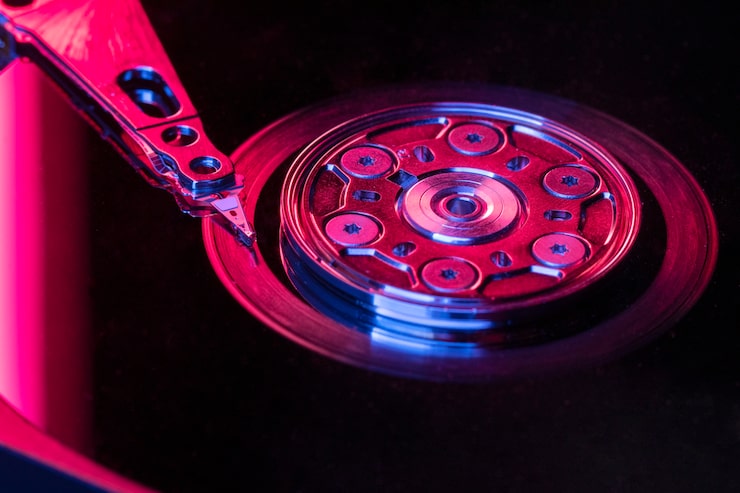
Glowing red brake rotor disc

Professional Brake Repairs & Fluid Services.
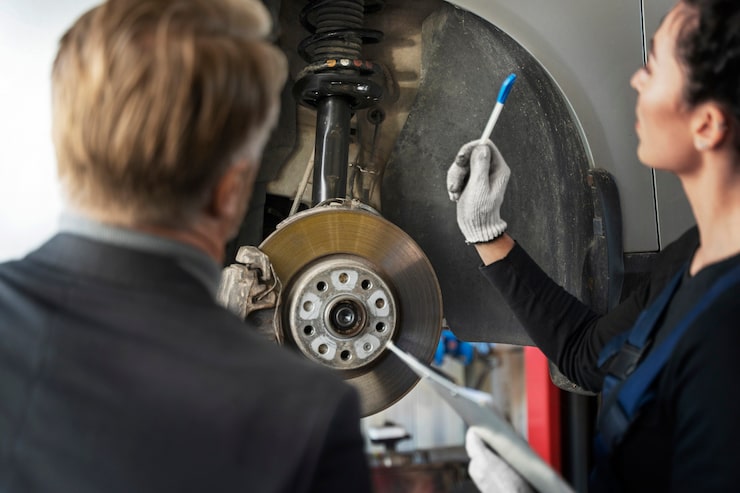
Mechanic inspecting worn brake pads

When discussing the fundamental pillars of automotive safety, your vehicle's braking system undeniably stands at the absolute pinnacle of importance. It is the singular, non-negotiable mechanical system that stands between you and a potentially catastrophic collision on the road. The physics governing how your car stops are both beautifully simple and incredibly violent: your braking system is designed to convert the massive kinetic energy of a rapidly moving, multi-ton vehicle entirely into extreme thermal energy (heat) through the application of immense, hydraulic-assisted mechanical friction. In the highly demanding and highly variable Australian driving environment—where you might transition from navigating steep, heavily congested urban declines to encountering unpredictable wildlife on high-speed regional highways in the blink of an eye—the absolute reliability and immediate responsiveness of your brakes must never be compromised. [Image of a car disc brake assembly diagram] Over time, the intense friction materials designed to execute this critical task naturally degrade, harden, and wear away, leaving your vehicle increasingly vulnerable to significantly extended stopping distances and dangerously unpredictable handling dynamics during emergency braking maneuvers.

Fortunately, a failing braking system is rarely a silent issue; your vehicle is designed to provide numerous, highly distinct warnings that professional intervention is urgently required. The most universally recognized symptom is auditory: a high-pitched, metallic squealing sound that occurs precisely when you gently apply pressure to the brake pedal. This is not a random noise; it is an intentionally engineered acoustic warning from a small metal indicator deeply embedded within the brake pad material, explicitly signaling that the friction material has reached a critically low thickness. If this initial warning is completely ignored, the sound will rapidly evolve into a horrifying, deep, structural grinding noise. This grinding signifies that the abrasive metal backing plate of the exhausted brake pad is now aggressively tearing into the smooth, expensive surface of your brake rotor, causing irreversible physical damage and dramatically escalating your eventual repair costs.

Beyond auditory cues, you must also remain hyper-vigilant to distinct tactile warnings transmitted directly through your steering wheel and the brake pedal itself. If your steering wheel violently shudders or heavily vibrates precisely when you attempt to slow down from highway speeds, it is a definitive indication that your brake rotors have become severely warped and distorted due to repeated exposure to extreme, unmanaged heat cycles. Similarly, if your brake pedal suddenly feels uncharacteristically spongy, unusually soft, or if it sinks alarmingly close to the floorboard before the vehicle begins to decisively decelerate, you are likely experiencing a highly dangerous loss of hydraulic pressure. This loss of pressure is almost always caused by a dangerous physical leak within the complex network of brake lines, or by heavily degraded brake fluid that has absorbed atmospheric moisture and completely boiled within the calipers. Any of these symptoms strictly mandate an immediate, comprehensive mechanical inspection at our facility.

Ceramic Brake Pads Rotor Machining Hydraulic Bleeding Safety Inspections
Book Your Service
Clean bright workshop tools background

Comprehensive Brake Inspection & Replacement Process.

Calipers and new brake rotors

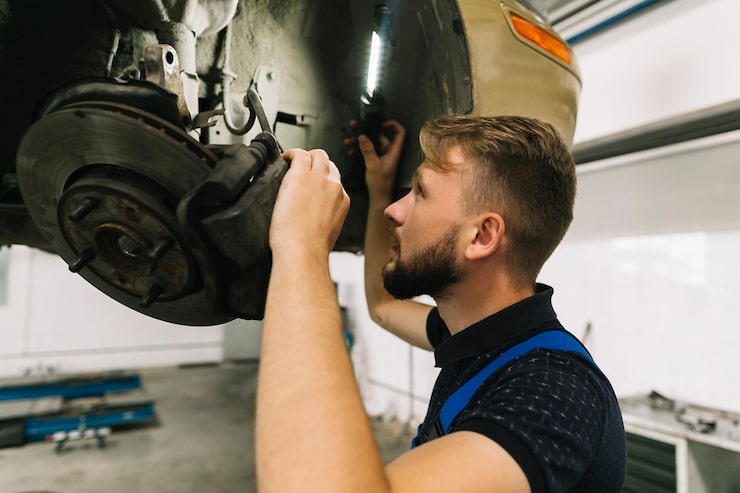
When you confidently bring your vehicle into our highly specialized workshop expressing concerns regarding your braking performance, we do not simply guess at the solution or immediately resort to blindly replacing expensive components. Instead, we initiate a rigorous, highly methodical, and heavily documented inspection process designed to uncover the exact, underlying root cause of the specific malfunction. We begin by safely elevating the vehicle on our heavy-duty hydraulic hoists and systematically removing all four wheels to gain completely unhindered visual and physical access to the entire braking infrastructure. Our highly trained technicians then utilize precise digital micrometers to accurately measure the exact remaining thickness of your brake pads and meticulously check the brake rotors for any dangerous lateral runout (warping) or severely excessive physical wear that falls below the strict minimum safety tolerances legally mandated by the original vehicle manufacturer.

Once we have conclusively identified the specific heavily worn or fundamentally damaged components, we proceed with the meticulous replacement process using only premium, carefully selected materials. For brake pads, we heavily favor the installation of high-quality ceramic or advanced semi-metallic friction compounds that are specifically engineered to provide vastly superior, fade-resistant stopping power while simultaneously generating significantly less abrasive, wheel-ruining brake dust. Regarding the heavy steel brake rotors, we face a critical mechanical decision based on our precise measurements: if the rotor remains sufficiently thick and structurally sound, we will utilize highly advanced, on-car lathe machinery to perfectly resurface (machine) the metal, restoring a perfectly flat, parallel surface for the new pads to grip. However, if the rotors are deeply scored, heavily warped, or dangerously thin, we will strictly insist on complete replacement to ensure your ultimate safety is never compromised.

Furthermore, an absolutely crucial, yet very frequently overlooked, component of a truly professional brake service involves the meticulous maintenance of the sensitive hydraulic system. Brake fluid is highly hygroscopic, meaning it aggressively absorbs moisture directly from the surrounding atmosphere over time. This trapped moisture drastically lowers the fluid's boiling point, leading directly to a highly dangerous condition known as 'brake fade' during heavy usage. During our comprehensive service, we utilize highly specialized, pressurized bleeding equipment to completely flush the old, dark, contaminated brake fluid from the master cylinder, the intricate ABS module, and the individual wheel calipers. We replace it entirely with fresh, premium-grade synthetic fluid that heavily exceeds all DOT safety specifications. Finally, we thoroughly lubricate all caliper slide pins with high-temperature silicone grease to ensure perfectly even pad wear, torque your wheels to the exact factory specification, and perform a rigorous, dynamic road test to properly bed-in the new friction materials before returning your keys.

  • Digital Measurement of Pad Thickness and Rotor Runout
  • Installation of Premium Ceramic or Semi-Metallic Brake Pads
  • Precision Machining or Complete Replacement of Brake Rotors
  • Comprehensive Flushing and Bleeding of Hydraulic Brake Fluid
  • Lubrication of Caliper Slides and Final Dynamic Road Testing

Interconnected Safety Systems & Related Services.

It is a fundamental principle of advanced automotive mechanics that your braking system absolutely does not operate within an isolated mechanical vacuum. The ultimate effectiveness of your newly installed, high-performance brakes is entirely deeply reliant upon the optimal operational condition of several other highly interconnected vehicle systems. Most critically, the absolute best, most expensive brakes in the world are rendered completely useless if the physical tyres connecting your vehicle to the asphalt are severely compromised. When we perform a deep brake inspection, we are simultaneously meticulously evaluating the current condition of your tread depth and overall rubber integrity. If your tyres are bald, heavily aged, or severely under-inflated, your vehicle will still dangerously skid and dramatically extend its stopping distance during an emergency, regardless of how forcefully the new brake calipers clamp down. In such highly critical scenarios, we seamlessly transition into providing expert Tyres, Wheel Alignment & Balancing services to holistically restore your vehicle's total stopping capability.

Equally important to overall braking performance is the absolute structural integrity of your vehicle's complex suspension network. During a heavy, panic-braking event, the massive forward momentum of the vehicle heavily forces the front nose to violently dive downward. If your front shock absorbers are heavily worn, leaking, or fundamentally blown, they will completely fail to control this aggressive weight transfer. This severely unloads the critical weight from the rear tyres, causing them to dangerously lock up prematurely, while simultaneously overwhelming the front brakes, ultimately leading to a highly unstable, highly terrifying loss of steering control. This is exactly why our comprehensive brake inspections very frequently lead to highly necessary Suspension & Steering Repairs. Furthermore, modern braking heavily relies on the intricate Anti-lock Braking System (ABS), which is heavily governed by sensitive wheel speed sensors and a highly complex electronic control unit. If you are experiencing persistent ABS dashboard warning lights alongside poor braking performance, our highly specialized Auto Electrical & Computer Diagnostics are absolutely essential to safely resolve the deeply hidden electrical faults governing your mechanical braking hardware.

Don't compromise on your safety. Book a brake inspection today.

Contact Our Team Now