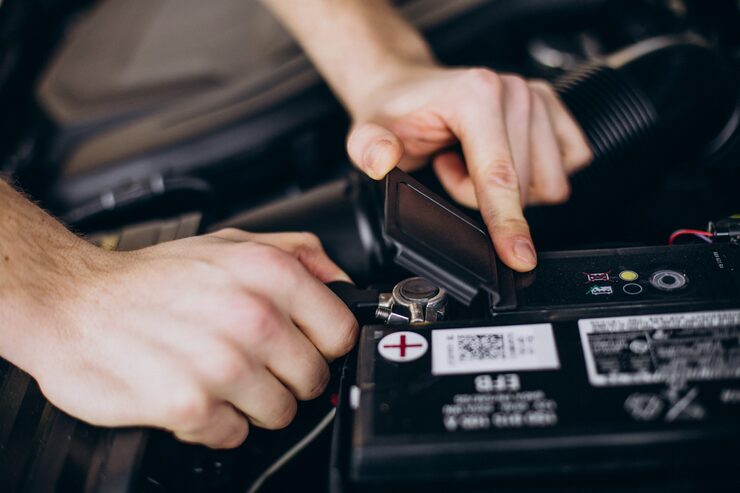
To truly understand the modern automobile, one must completely discard the outdated notion of a car as merely a mechanical collection of gears, belts, and combustion chambers. Today, the vehicle you drive across the harsh Australian landscape is, fundamentally, an incredibly sophisticated, highly complex rolling computer network. A standard modern passenger vehicle typically contains upwards of fifty distinct Electronic Control Units (ECUs), interconnected by literally kilometers of highly sensitive copper wiring and delicate fiber-optic cables known as the CAN bus system. These computers continuously monitor and meticulously dictate every single aspect of your vehicle's operation in real-time—from the exact microsecond a spark plug fires and the precise deployment timing of an airbag during a collision, to the simple comfort of your power windows and climate control. When this intricate, highly delicate electronic symphony falls out of perfect harmony, the resulting symptoms can be incredibly frustrating, deeply confusing, and highly dangerous if left entirely unresolved.
The most universally recognized, and often deeply feared, symptom of an underlying electrical or computer fault is the sudden illumination of dashboard warning lights. Whether it is the notorious amber Check Engine light, the critical ABS/Traction Control warning, or the dreaded flashing transmission indicator, these visual cues are your vehicle's primary method of desperately communicating that a sensor reading has fallen dangerously outside its strictly programmed parameters. However, electrical failures very frequently manifest in far more subtle, highly erratic ways. You might experience the deeply frustrating phenomenon of a "parasitic drain," where your vehicle's battery mysteriously, completely dies overnight, leaving you stranded in your driveway every morning despite the battery itself being brand new. You may encounter incredibly bizarre, intermittent behavior: power windows that only operate when it rains, a radio that unexpectedly changes stations when you apply the brakes, or central locking systems that absolutely refuse to secure the vehicle doors. These are not mechanical mechanical failures; they are the distinct hallmarks of deeply compromised electrical circuits, heavily corroded ground connections, or failing internal computer modules.
Furthermore, core drivability is often severely impacted by electrical degradation. If your engine is suddenly suffering from harsh misfires, experiencing incredibly rough, violent idling, aggressively stalling at red lights, or completely failing to start despite the starter motor cranking strongly, the root cause is almost always deeply embedded within the complex engine management system. A single failing mass airflow sensor, a deeply corroded crankshaft position sensor connector, or a heavily degraded ignition coil can instantly cripple the mechanical performance of an otherwise perfectly healthy engine block. Attempting to diagnose these highly complex, deeply hidden electrical anomalies through sheer guesswork or outdated trial-and-error parts replacement is virtually guaranteed to result in massive, entirely unnecessary financial expense. These highly intricate systems demand the intervention of deeply specialized auto electrical technicians utilizing the absolute cutting-edge of modern diagnostic technology to accurately isolate and permanently repair the true source of the malfunction.

When you formally entrust your vehicle to our highly advanced workshop for complex electrical and computer diagnostics, you are entirely avoiding the deeply flawed, highly expensive "parts cannon" approach utilized by many inexperienced mechanics. A fundamental misunderstanding in the automotive industry is that a computer scanner simply tells the mechanic exactly what part to replace. This is entirely false. When our expert technicians connect a state-of-the-art diagnostic scanner to your vehicle's On-Board Diagnostics (OBD2) port, the extracted fault code merely indicates which specific electrical circuit is currently experiencing an anomaly; it absolutely does not specify whether the physical sensor has completely failed, if the wiring harness leading to it has been aggressively chewed through by rodents, or if the main computer module itself has suffered catastrophic internal water damage. The fault code is merely the very first clue in a highly complex, heavily technical diagnostic investigation.
Once we have extracted the relevant codes and meticulously analyzed the live data streams broadcasting directly from the vehicle's heavily networked modules, we heavily transition to advanced physical testing. Our highly trained technicians utilize highly sensitive digital multimeters and incredibly advanced automotive oscilloscopes. An oscilloscope is a highly specialized piece of equipment that allows us to visually observe the actual electrical voltage waveforms traveling through a specific wire in real-time, measured in precise milliseconds. By analyzing the shape, amplitude, and frequency of these complex electrical signals, we can definitively prove whether a heavily buried cam sensor is functioning perfectly, or if a deeply hidden wire is suffering from microscopic internal breakage that only separates when the engine vibrates. This extreme level of pinpoint accuracy entirely eliminates costly guesswork, ensuring that we only ever replace the exact component or section of wiring that is genuinely, fundamentally broken.
Our comprehensive repair process for electrical faults is executed with extreme meticulousness. If a section of the heavily complex wiring harness is found to be severely chafed or deeply melted due to extreme exhaust heat, we do not simply twist the broken wires together and wrap them in cheap electrical tape. We perform highly durable, professional-grade soldered repairs, meticulously protected by heavy-duty, heat-shrink weatherproofing to completely prevent future moisture intrusion and highly destructive galvanic corrosion. If a highly complex computer module (ECU) has undeniably failed, we possess the advanced equipment required to not only physically replace the expensive hardware but also to successfully perform the highly complex software reprogramming and security key coding necessary to smoothly integrate the new module into your vehicle's deeply encrypted anti-theft network. Finally, after any electrical repair, we systematically clear all historical fault codes from the network memory, perform a rigorous dynamic road test, and intensely re-scan the entire system to absolutely verify that the electrical integrity of your vehicle has been flawlessly, permanently restored.
It is an absolutely unavoidable reality of modern automotive design that auto electrical systems are deeply, inextricably woven into the physical operation of every single mechanical component on your vehicle. An electrical fault rarely exists in complete isolation; it almost always manifests as a highly frustrating mechanical failure in an entirely different system. For example, a customer may bring their vehicle to us complaining that their air conditioning has completely ceased blowing cold air, fully expecting to require an expensive AC compressor replacement or a standard regas. However, our deep electrical diagnostics frequently reveal that the mechanical AC system is perfectly healthy, but a deeply buried, ten-dollar electrical relay has entirely failed, or the interior ambient temperature sensor is sending wildly inaccurate digital data to the climate control module, entirely preventing the system from engaging. In these common scenarios, highly precise Auto Electrical Diagnostics perfectly intersect with our specialized Car Air Conditioning services, saving the customer significant unnecessary expense.
This profound interconnectivity is equally, if not more, critical when evaluating your vehicle's fundamental safety infrastructure. If your dashboard is aggressively illuminated with ABS, Traction Control, and Stability Control warning lights, your heavily relied-upon dynamic safety systems have entirely shut down. While the initial assumption might be a massive mechanical failure requiring extensive Brake Services, our advanced computer scanning often isolates the catastrophic failure down to a single, heavily corroded wheel speed sensor or a severely damaged, highly delicate wiring pigtail located near the suspension assembly. Similarly, a highly persistent check engine light related to poor fuel mixture or severe ignition misfires dictates an immediate, deep electrical investigation of the engine management sensors, which seamlessly transitions into our comprehensive Logbook Servicing & Diagnostics packages. By thoroughly understanding the deeply complex digital language of your modern vehicle, our expert technicians ensure that every single mechanical, hydraulic, and electrical system communicates perfectly, heavily ensuring your absolute safety, maximizing your vehicle's performance, and deeply protecting your valuable investment.